Hours, prices and access verified by the Whitehaven Beach Tours team — last checked 2026-09-21.
Whitehaven Beach is a national-park beach on an island with nobody
living on it. You find picnic tables and non-flush toilets, and not much else: no shop,
no fresh water, no phone signal and no lifeguards. Your boat brings what the island
lacks, so compare what each of the Whitehaven Beach boat tour carries before you
choose.
What is on the sand
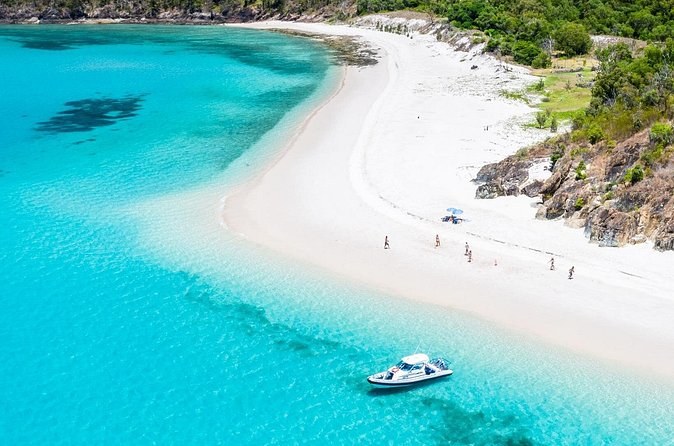
The day-use area is at the southern end of the beach, on the south-east side of
Whitsunday Island. It is open 24 hours a day and charges nothing.
Picnic tables:
Some of them sheltered
Toilets:
Non-flush, in the day-use area
Camping area:
Behind the beach, 10 sites for up to 36 people, with hybrid toilets and a sheltered communal table
View:
Across the water to Haslewood Island
Walks:
The Solway circuit and the Chance Bay track at the southern end; the Hill Inlet lookout at the northern end
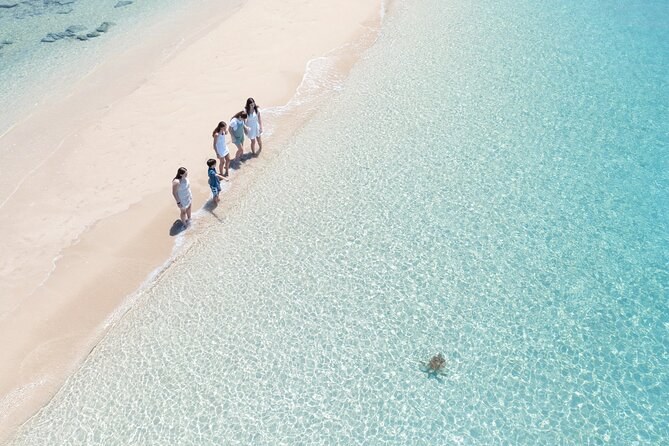
Walkers on white sand at the water's edge seen from straight above, a turtle resting in the clear shallows beside them
What is not there
Plan round the gaps. Queensland Parks and Wildlife Service lists each one:
No fresh water. Carry at least 2 litres each, or check that your boat
refills bottles.
No mobile reception. Neither at Whitehaven Beach nor at Tongue
Point.
No lifeguards. Medical help can be hours away.
No shop or kiosk. Lunch and drinks come with your boat, or with
you.
No wheelchair-accessible facilities. Ask your operator how you would
get from the boat to the sand.
No campfires. They are banned throughout the park.
Stingers in the water
Wear a stinger suit whenever you swim. The
park says dangerous marine stingers, sharks and crocodiles can be in the sea at all times
of the year. The small stingers are called Irukandji, and a sting needs urgent medical
help.
If someone is stung, get them out of the water. Pour vinegar on the sting for several
minutes, and use sea water if the vinegar runs out. Do not rub the welts with sand or rinse
them with fresh water. Then get medical help and stay with them.
Crocodiles, sharks and things that sting
Crocodiles live around the Whitsundays too. The park asks you never to swim at dawn,
dusk or night. It also names cone shells, blue-ringed octopus and stonefish, so look but
never touch.
Getting from the boat to the sand
There is no jetty on the beach. How you get ashore depends on the boat. ZigZag runs
unlimited water taxis between the catamaran and the beach all day. The helicopter lands on
the sand itself. Ocean Rafting says its rafts reach the Hill Inlet beaches directly, which
is the operator's own claim.
Expect wet feet on most landings, so wear shoes you can wade in. If you use a wheelchair
or walk with difficulty, ask the operator how you would get ashore before you book.
What your boat provides
With nothing to buy on the island, the boat is your shop, your kitchen and often your
bathroom. Here is what each operator says it brings.
Tour
Lunch
Drinking water
Stinger or wetsuit
Toilet on board
Ocean Rafting raft day
Tropical lunch on the beach
Not stated
Sunsuit or wetsuit
Not stated
SeaLink catamaran
Buffet on board
Bar on board
None: no swim is planned
Not stated
Red Cat catamaran
Buffet
Not stated
Not stated
Not stated
ZigZag catamaran
Buffet, with vegan and gluten-free options
Cold refills at lunch; bring a bottle
Wetsuit or stinger suit
Not stated
Iconic speedboat
Buffet
A drinking-water fountain
Stinger suit
Not stated
Whitehaven Xpress
Barbecue on the sand
A refill station
In stinger season
Not stated
Half-day catamaran
Tea only
Sold on board
Stinger suits
Not stated
OzSail trimaran Avatar
All meals
Not stated
Not stated
Yes
Private charter
Extra, $30 a head
Bottled water
Not stated
Not stated
SeaLink's day is for sightseeing and the beach, so it lists no snorkel gear. It asks
you to bring your own towel, swimwear and sunscreen. The helicopter asks the same, along
with your sunglasses and camera.
Want lunch on the sand?
Ocean Rafting and Whitehaven Xpress serve lunch on the beach itself. The catamarans serve it on board.
A refillable bottle: at least 2 litres of water for the day.
Sun protection: a hat, sunglasses and reef-safe sunscreen. Built
shelter is limited to some of the picnic tables.
Closed shoes: the Hill Inlet track is 1.3 km of uphill path.
A warm layer: the crossing is windy, and in July highs average
21.6 °C.
A dry bag: for your phone on a raft or a wet landing.
Cash or a card for drinks: most boats sell drinks on board.
The Ngaro people
The Ngaro people are the Traditional Owners of these islands. They have lived here for
over 9,000 years, according to Queensland Parks and Wildlife Service. They are one of the
earliest recorded Aboriginal groups in Australia, and Lieutenant James Cook saw them in
1770 as he sailed the Whitsunday Passage.
You meet their story on the Hill Inlet lookout track, where signs describe their way of
life. The park also points you to the Ngaro Cultural Site track at Nara Inlet.
SeaLink's day passes Nara Inlet on its way out.
Leaving no trace
The park is part of the Great Barrier Reef World Heritage Area, and a few habits keep
it that way:
Check your gear before you land. The park asks you to clear seeds and
soil from boots and bags.
Take your rubbish home. The park asks campers to bring rubbish
bags, and a day visitor should do the same.
Never touch marine animals. Some sting, and the park asks you to
leave them alone.
No fires. Campfires are banned throughout the park.
Questions about the day
Are there toilets on the beach?
Yes, non-flush toilets and picnic tables at the day-use area. There is no fresh water and no shop, so bring water. Most boats have a toilet on board.
Is there mobile reception on the beach?
No. Queensland Parks and Wildlife Service says there is no mobile reception at Whitehaven Beach or at Tongue Point. Tell someone your plans before you go.
Is there fresh water at Whitehaven Beach?
No. The park says most islands have no fresh water, and it asks you to carry at least 2 litres per person per day. Several boats refill bottles, so bring one.
Are there lifeguards at Whitehaven Beach?
No. The islands are remote and medical help can be hours away, so the park asks you to take charge of your own safety. Swim near your group and wear a stinger suit.
What should I bring?
Swimwear, a towel, a hat, sunscreen, a refillable water bottle and closed shoes for the walk. In the cooler months a warm layer helps on the boat.
Who are the Traditional Owners?
The Ngaro people, who have lived in the islands for over 9,000 years. Signs along the Hill Inlet lookout track tell some of their story.
Where these facts come from
Facilities, safety advice and the Ngaro history are Queensland Parks and Wildlife
Service's, checked 21 September 2026. Each boat's lunch, water and suits are from that operator's own
description of its tour.
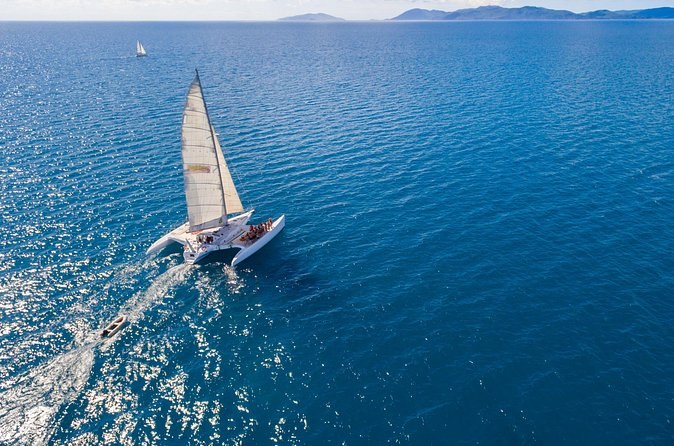
Two nights on the sailing trimaran Avatar, for up to 26, with all meals and activities, park fees and a toilet on board. About three hours on the beach, and free cancellation to 24 hours.
Eight hours on an air-conditioned catamaran, with up to four hours on the sand on the beach-only ticket and a guided walk to the southern lookout. No stop at the inlet, and you walk to the marina yourself.
Your own boat and skipper for up to eight, for six or eight hours on a route you choose, from one of four boarding points. Snorkel gear and water are in the price; catering is $30 a head extra, and there is no refund if you cancel.