Camping on Whitehaven Beach, or Two Nights on a Boat Instead
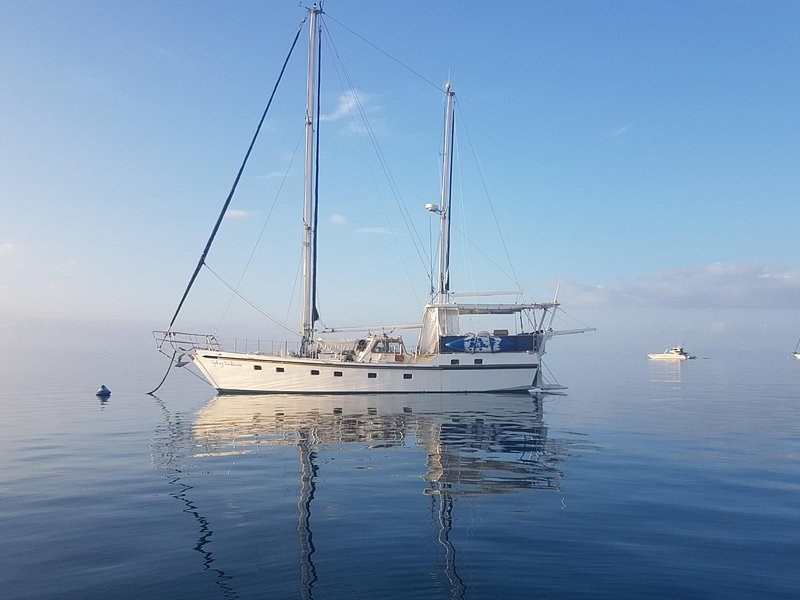
The short answer. Yes. The park keeps a small camping area at the southern end of the beach: ten sites, 36 people at most, reached by boat only, with a permit booked ahead. There is no fresh water and no campfires. If that sounds like too much gear, two nights on a sailboat get you out there too.
Quick facts
- Sites: ten defined sites, including a large group area, for up to 36 people.
- Access: by boat only, at all tides. No road reaches the island.
- Times: check in after 2pm, check out by 11am.
- Facilities: hybrid toilets and a sheltered communal picnic table.
- Ground: walk-in camping on sand and dirt.
- Permit: required, and booked before you go.
- Fires: none. The park does not allow campfires.
Why people camp here
The day boats leave between about 7:40 and 9am. Then they have 40 km of sea to cross, by the park's figure from Shute Harbour. So the first boats reach the sand some time after that. Camp on the beach and you have it before they arrive and after they go.
That is the whole appeal, and it is a real one. You also get the walks at your own pace. The Solway circuit begins near the camping area: 2.4 km, about 40 minutes, climbing through grasstrees and cycads to a lookout over Solway Passage. The Chance Bay track branches off it, 7.2 km return and about three hours. Both are set out on the things to do page.
Getting there with your gear
You need a boat. The park says commercial operators run camping tours and camper transfers from Coral Sea Marina and the Port of Airlie at Airlie Beach, and from Shute Harbour. The park lists canoe and kayak as the other ways in.
The camping area sits about 30 km east of Shute Harbour in a straight line, and about 40 km by sea. There are no public moorings at the beach itself; the nearest are at Tongue Bay and Chalkies Beach. How to reach the harbours by road is on the how to get there page.
If you bring your own boat, the park lists public boat ramps at the Port of Airlie and Coral Sea Marina in Airlie Beach, at Shute Harbour, and at Cannonvale, 4 km east of Airlie Beach. Bareboats and private charters also leave from Airlie Beach, Shute Harbour and Hamilton Island. The beach can be reached at all tides, so you can land your gear whenever you arrive.
What to bring
Bring everything, because the island gives you almost nothing. Most islands have no fresh water, and the park asks you to carry at least 2 litres a person a day. There is no phone signal on the beach. Medical help can be hours away. Tell someone your plans and when you will be back.
- Water: 2 litres a person a day, as a minimum.
- A stinger suit: the park says stingers can be in the sea all year.
- Clean gear: check boots, bags and tents for seeds and soil before you land.
- Food that needs no fire: campfires are not allowed.
- Your permit: booked before you go.
The permit and the rules
You cannot simply turn up with a tent. The park requires a camping permit for the Whitehaven Beach camping area, booked before you go, and the numbers are capped at 36 people. The fee is set by the park; check it when you book. Keep your booking with you.
The rules are short. Check in after 2pm and leave by 11am. Camp in the defined sites, on sand and dirt, and walk your gear in from the beach. Light no fires. Check your boots, bags and tents for seeds and soil before you land, because the park asks every visitor to arrive pest-free. There are no wheelchair-accessible facilities anywhere in the park, which rules this out for some travelers. Access, facilities and what the day-use area has are on the visitor guide.
The walks from your tent
Camping puts the southern walks on your doorstep. The Solway circuit is the short one, a 2.4 km loop through grasstrees, cycads and rock ferns. The Chance Bay track is the long one, 7.2 km return, and Chance Bay itself can also be reached by boat, about 17.3 nautical miles from Shute Harbour at mid to high tide. Both tracks are part of the Whitsunday Ngaro sea trail.
The name is a reminder of whose country this is. The Ngaro people have lived in the islands for over 9,000 years, and signs on the Hill Inlet lookout track tell some of their story. Lieutenant James Cook saw them in 1770, exploring the Whitsunday Passage.
Two nights on a boat instead
If carrying a tent, water and food across 40 km of sea sounds like too much, sleep on a boat. OzSail sells two-night trips on sailboats that anchor among the islands. The crew cook, the gear is on board, and the boat can put you on the beach early. One traveler on 'Spank Me' said they were the first ones on Whitehaven Beach.
| Camping on the beach | Two nights on 'Spank Me' | Two nights on Avatar | |
|---|---|---|---|
| Where you sleep | Your tent, on sand | A bunk below deck | On board a trimaran |
| Meals | Yours to carry | Breakfast, lunch, dinner | All meals |
| Getting there | A transfer or your own boat | From Airlie Beach | From Airlie Beach |
| Cost | A permit plus a transfer | $471 a person | $434 a person |
| People | Up to 36 in the area | Up to 27, ages 16 to 80 | Up to 26 |
| Cancellation | The permit's own terms | Free to 4 days | Free to 24 hours |
The boats have their own rules. 'Spank Me' takes adults from 16 to 80, and you cancel at least four days ahead for a refund. One reviewer found the trip far more basic than expected: a bunk below and little room anywhere else. Avatar takes up to 26 and refunds to 24 hours. The full picture of the first is on the two-night sailing trip page.
Which one suits you
Camping suits you if you have camped before, can carry your water, and want the beach to yourself at the start and end of the day. It is the quietest way to spend a night there. It asks the most of you.
The boat suits you if you want the early beach without the gear. It is social rather than quiet, and you share the deck with up to 26 others. It also takes you to other bays and reefs: 'Spank Me' can include snorkel stops at Blue Pearl Bay and Luncheon Bay. The sailing trips and the day sails are compared on Whitehaven Beach sailing tours.
- Experienced campers: the camping area, with a permit and a transfer.
- First overnight in the islands: two nights on a sailboat.
- Only one day free: a day boat; the hours-on-the-sand guide compares them.
Nights aboard instead of a tent
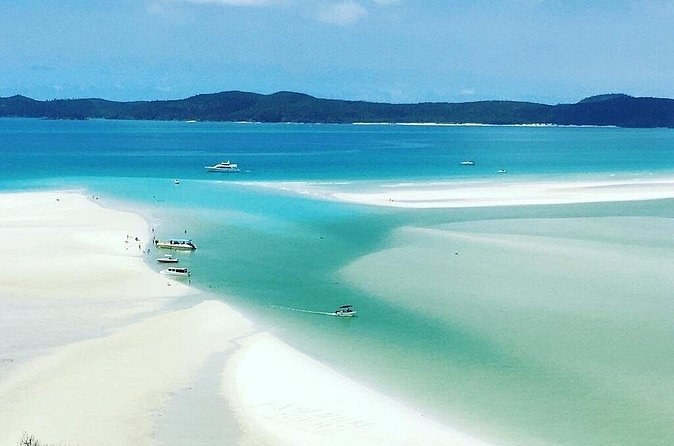
2-Night Whitsundays Sailing Cruise incl. Whitehaven Beach & Great Barrier Reef
Two nights on an 82-foot sailboat, sleeping in bunks below deck, with every meal, snorkel gear and park fees in the fare. Adults 16 to 80; cancel four days out for a refund.
From $471 per person
Check Availability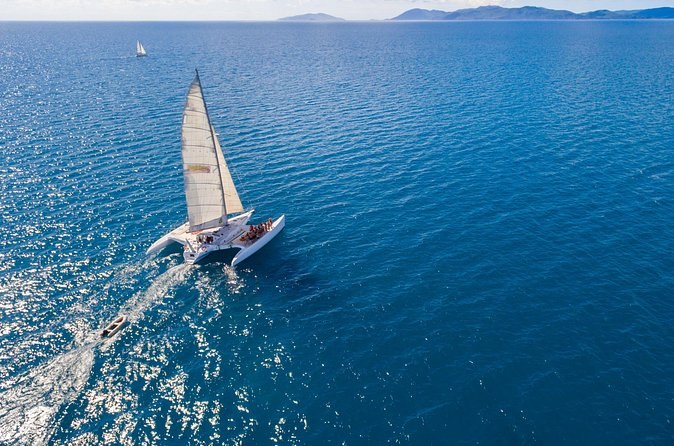
2-Night Whitsunday Islands Sailing Adventure on Trimaran Avatar
Two nights on the sailing trimaran Avatar, for up to 26, with all meals and activities, park fees and a toilet on board. About three hours on the beach, and free cancellation to 24 hours.
From $434 per person
Check Availability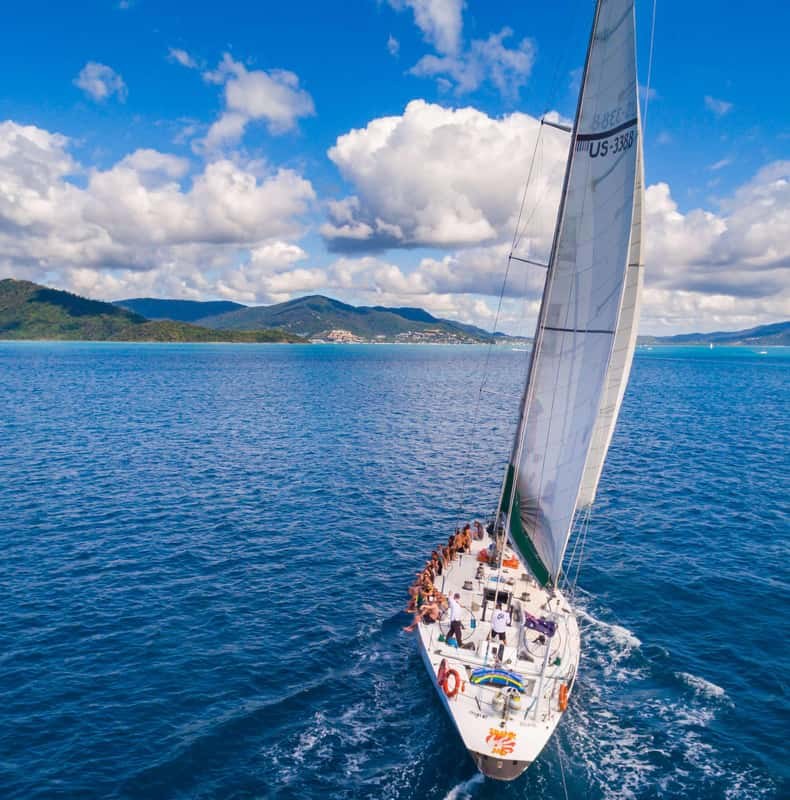
Airlie Beach: 2-Night Whitsundays Sailing Trip with Meals
Three days and two nights on one of OzSail's sailboats, back at the marina about 8 or 9am on the third day. Meals, a wetsuit and snorkel gear are in the fare, and it refunds up to 24 hours ahead.
From $372 per person
Check AvailabilityNext: Plan the day boats around your nights in the guide to fitting the beach into a short visit. Every fare sits side by side on Whitehaven Beach Tours.