Can You Swim at Whitehaven Beach? Stingers, Suits and No Lifeguards
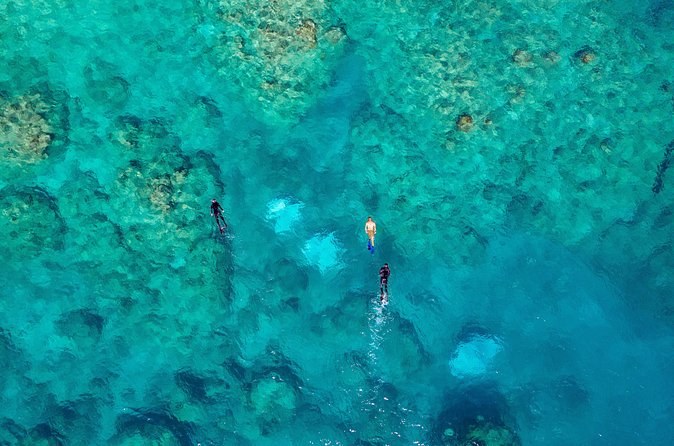
The short answer. Yes, in a stinger suit. The park says dangerous marine stingers, sharks and crocodiles can be in the sea at all times of the year, not just in summer. There are no lifeguards and no phone signal on the beach. Most snorkel days hand you a suit; check that yours does, and wear it.
What is in the water
The water off Whitehaven Beach is clear, shallow and inviting, which is why the warnings surprise people. Queensland Parks and Wildlife Service is plain about them. Dangerous marine stingers, sharks and crocodiles can be in the sea at all times of the year. The stingers it means include the Irukandji, and it calls them dangerous for good reason.
The park lists more that stings or bites. Cone shells, blue-ringed octopus and stonefish all live around the islands, so never pick up a shell or touch a marine animal. Estuarine crocodiles live around the Whitsundays too. The park's advice is to never swim at dawn, at dusk or at night, and to stand at least 2 metres back from the water's edge. And it names Cid Harbour, on the western side of Whitsunday Island, as a known site for shark attacks. The full list, as the park sets it out, is on the what to expect page.
Why "all year" matters
You will read about a stinger season in plenty of places, usually the warm months. The park does not use one. It says the stingers can be in the sea in every month, and tells you to wear a stinger suit whenever you snorkel or go in the water. Take that at its word.
Some listings still use the old language. The barbecue speedboat day lists stinger suits "in stinger season" and hires winter suits outside it. If you are on that day, ask for a suit anyway. Suits have a second use too. One sailing reviewer said they keep you a little warm, and suggested a rash vest in September if you feel the cold. Why the dry months still bring the best days is on the best time to visit page.
What your boat hands you
The fare decides the kit. Here is what each kind of day puts in the fare, from the listings. If a row says "not listed", ask the operator before you book.
| The day | Suit in the fare | Snorkel gear |
|---|---|---|
| Ocean raft, snorkel and lunch | Sunsuit or wetsuit | Yes |
| Fast catamaran, two snorkel stops | Not listed | Mask and snorkel; no fins |
| Speedboat to the outer reef | Stinger suit and flotation | Yes, guided |
| Eco-cruise | Wetsuit or stinger suit | On the snorkel ticket |
| Speedboat with a beach barbecue | In stinger season; winter suits for hire | Not listed |
| Half-day catamaran | Protective stinger suits | No snorkel stop |
| Big catamaran, no snorkel | No | No: a beach day |
| Two nights on 'Spank Me' | Available on board | Yes |
Two rows need a word. The fast catamaran lists masks and snorkels but no suit, and it leaves fins and prescription masks out of the fare. The big catamaran day has no snorkel at all, and asks you to bring your own swimwear and towel. If you plan to swim on that day, bring a suit of your own.
No lifeguards, no phone signal
This is the part that changes how you swim. There are no lifeguards at Whitehaven Beach. The islands are isolated and remote, and the park warns that medical help can be hours away. There is no mobile reception on the beach or at Tongue Point, where the Hill Inlet walk starts.
So swim where your crew can see you, and stay in your depth. Tell the crew if you are not a strong swimmer; they would rather know. Take water too: most islands have no fresh water, and the park asks you to carry at least 2 litres a person a day. How the beach itself is laid out, from the southern day-use area to the inlet, is on the map page.
The two ends of the beach
Where you swim depends on where your boat lands you. The southern end has the day-use area, with picnic tables, some of them sheltered, non-flush toilets and a view across to Haslewood Island. Boats can anchor off it at any tide, so the days that land there give you the most predictable time in the water.
The northern end works to the tide. The park says boats can reach Tongue Point, where the lookout track starts, from mid to high tide. From the track, the Beach track runs 500 metres return, about 20 minutes, down to the mouth of the inlet and on to Betty's Beach. That is where the swirl of sand meets the sea, and the water there moves with the tide, so swim only where your crew says to. How the tide shapes the day is on the lookout walk page.
If someone is stung
The park gives the first aid in four steps. Learn them before you go in, because you will not be able to look them up on the sand.
- Get out of the water. Help the person out at once.
- Douse the sting with vinegar. Pour it on for several minutes.
- Do not rub it. No sand, and no fresh water.
- Get urgent medical help. Tell your crew straight away; with no phone signal, they are your way to help.
Snorkeling: where the reef stops are
Most snorkeling happens away from the beach, at fringing reefs around the islands. The ocean-raft day stops at an inner fringing reef. The two-night boats name bays such as Blue Pearl Bay and Luncheon Bay. One speedboat day heads out to the outer Great Barrier Reef when the conditions allow. Conditions matter everywhere. One eco-cruise reviewer found poor visibility and cold water on an afternoon snorkel.
The payoff is real when it goes well. Travelers have seen turtles, a manta ray and fish by the hundred. The ocean-raft day includes the gear and a suit, at $180. The other snorkel days are set out on Whitehaven Beach day tours.
Children and non-swimmers
Children can swim here, with an adult close by and a suit on. The eco-cruise takes babies from three months on its beach-only ticket and children from four on the snorkel ticket. The ocean-raft day sells a child fare from two to fourteen. Nobody on the beach is watching the water for you, so the adult watching is you.
Non-swimmers need not miss out. On the fast catamaran, one family reviewer said the crew looked after everyone, from people who stayed in the tender to strong swimmers. Another traveler, who feared the open ocean, said the speedboat crew helped them snorkel the reef with confidence. If you would rather not swim at all, the catamaran beach day has no snorkel stop and costs $169.
Snorkel days with the kit in the fare
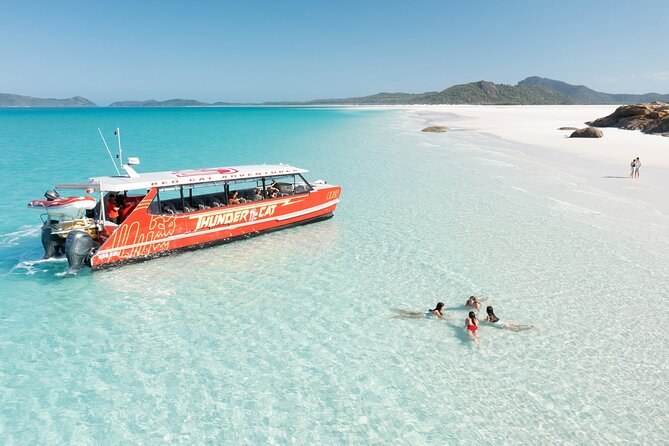
Whitehaven Beach and Hill Inlet Lookout Snorkeling Cruise
Eight hours on a high-speed catamaran with two snorkel stops, mask and snorkel provided, the lookout walk and about an hour on the beach. Fins and prescription masks are not in the fare.
From $181 per person
Check Availability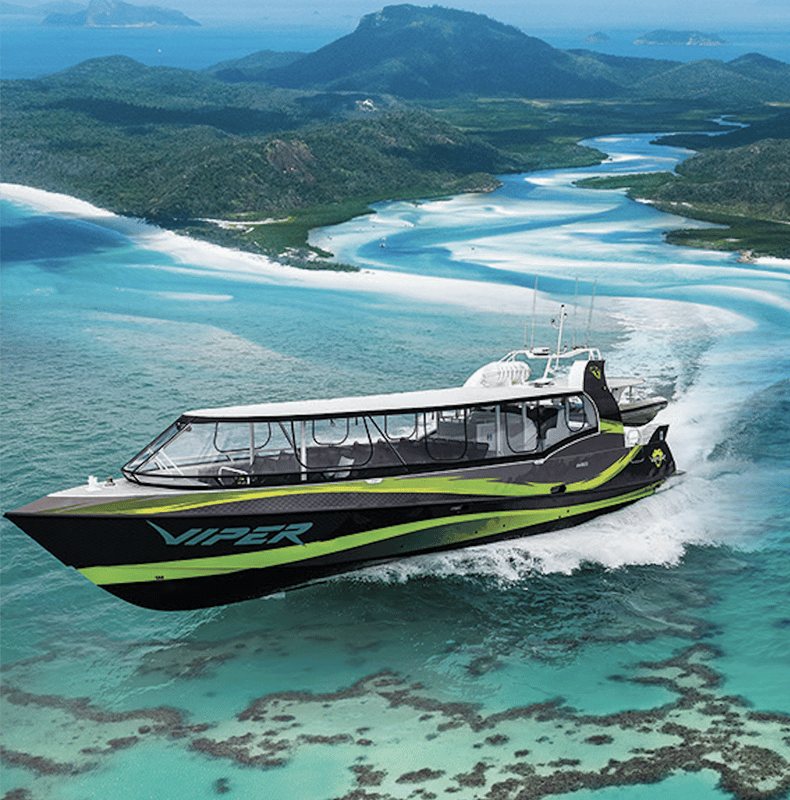
Airlie Beach: Great Barrier Reef & Whitehaven Beach Tour
Eight hours by jet speedboat, with about two hours snorkeling the outer reef when the conditions allow. A stinger suit and flotation are in the fare, then the lookout walk and two hours on the sand.
From $236 per person
Check Availability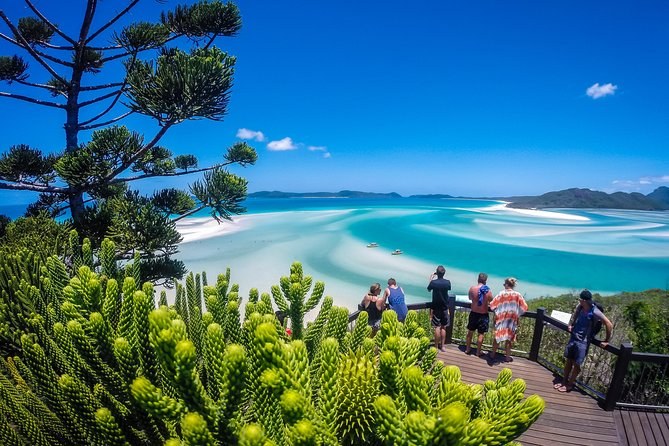
Ocean Rafting: Whitehaven Beach, Snorkelling & Hill Inlet Lookout
Seven hours on an open ocean raft: a reef snorkel in a sunsuit or wetsuit, the guided lookout walk, lunch on the sand and about two hours on the beach. Not recommended in pregnancy or with a bad back.
From $180 per person
Check AvailabilityNext: Decide how long you want out there with the hours-on-the-sand guide. Every fare sits side by side on Whitehaven Beach Tours.