Whitehaven Beach Without a Tour
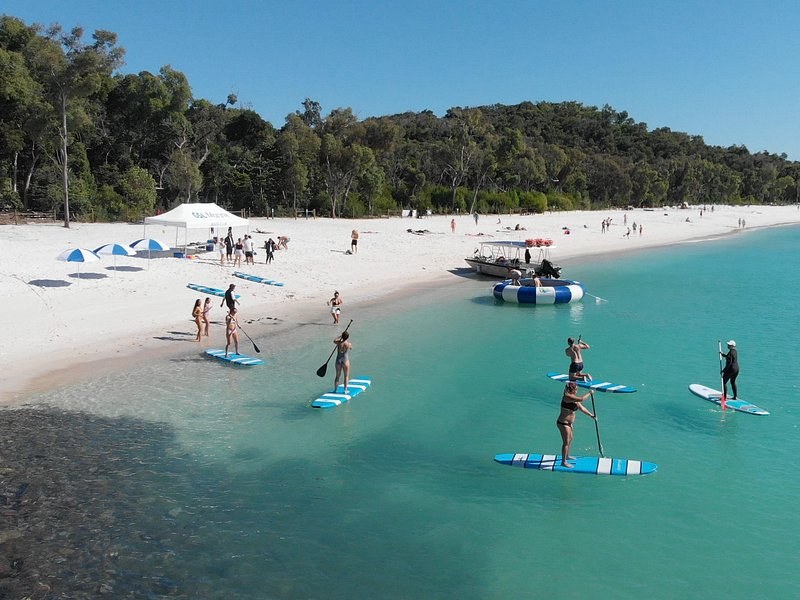
You do not need a tour to visit Whitehaven Beach. There is no gate and no ticket, and anyone who can reach the sand may land. What you need is a way across the water, and that is what the tours to Whitehaven Beach sell. This guide covers the other ways in, what each one asks of you, and when a crew is worth the fare.
Can you get to Whitehaven Beach without a tour?
Yes. The beach is a day-use area in Whitsunday Islands National Park, open 24 hours a day, with no admission. The park lists it as reachable by boat, canoe or kayak. No road reaches it, and there is no public ferry to the sand.
So the choice is not tour or no tour. It is who drives the boat. You can take your own, hire one, pay for a transfer and stay the night, paddle, or book a private charter with its own skipper. Each option has a different cost in money, skill and risk.
| Way in | Needs a skipper | Lookout reachable | Overnight |
|---|---|---|---|
| Your own boat | You | Mid to high tide, from Tongue Bay | Yes, at anchor |
| Bareboat hire | You | Mid to high tide | Yes, on board |
| Private charter | Included | On your route | No, 6 or 8 hours |
| Camping transfer | The operator | On foot, not from the camp | Yes, with a permit |
| Kayak | You | Only with the tide and the experience | With a camping permit |
| A shared tour | Included | On most | On the two-night boats |
By your own boat
If you have your own boat, the park's figures are what you plan with. The day-use area is about 40 km by sea from Shute Harbour, travelling anticlockwise round the island. Tongue Point, for the Hill Inlet lookout, is about 49 km. You may anchor off the beach at all tides.
You can launch from public ramps at the Port of Airlie and Coral Sea Marina in Airlie Beach, at Shute Harbour, and at Cannonvale, 4 km east of Airlie Beach. There are more at Dingo Beach, Conway Beach and Midge Point. The park says the roads to the launch sites all suit a 2WD car.
Bareboat and skippered charters
The park notes that bareboats and private charters leave from Airlie Beach, Shute Harbour and Hamilton Island. A bareboat means you sail or drive it yourself. A skippered charter puts a professional at the helm, and you pay for the boat rather than the seat.
The private charter in our tours is the skippered kind. The Rayglass boat takes your group of up to eight for six or eight hours, on a route you choose, for $2,793 per group. It boards at Hamilton Island Marina, Coral Sea Marina, Daydream Island or Palm Bay Resort on Long Island. Snorkel gear, bottled water and fees are included, and you may bring your own alcohol, but no glass.
Two things to know before you book it. Catering is extra, at $30 a person for morning tea, lunch and afternoon tea. And the fare is non-refundable: there is no refund if you cancel.
Camping transfers
The camping area at the southern end has ten sites and a large group area, for up to 36 people. You need a camping permit booked before you go. You check in after 2pm and leave by 11am. Operators run camper transfers from Coral Sea Marina, the Port of Airlie and Shute Harbour.
Camping is walk-in, on sand and dirt. There are hybrid toilets and a sheltered communal picnic table. Fires are prohibited and generators are not permitted. The park asks you to bring drinking water, rubbish bags and insect repellent, because there is no fresh water and no mobile coverage. Our post on camping on the beach compares it with a night on a boat.
By kayak
The park lists canoe and kayak as a way in, and the Whitsunday Ngaro sea trail runs off the beach, joining paddling, boating and walking across several islands. The Solway circuit and the Chance Bay track behind the beach are both part of it.
This is not a casual paddle. You cross open water with no lifeguards, and the park warns that medical help can be hours away. The Irukandji stinger, sharks and estuarine crocodiles can be in the sea at all times of the year. Paddle it only with experience, a plan and a camping permit for the night.
Where can you anchor?
You may anchor off Whitehaven Beach at all tides. There are no public moorings at the beach itself; the closest are at Tongue Bay and at Chalkies Beach.
For the lookout, the park puts public moorings in Tongue Bay and allows anchoring at Tongue Bay and at the mouth of the inlet. Access there is possible only from mid to high tide. Chance Bay is about 32 km from Shute Harbour and also needs mid to high tide. Check the tide tables before you set out.
Which walks can you do once you land?
Landing on your own gives you time for the park's tracks, which most tour days only sample. At the northern end, the Hill Inlet lookout track is 1.3 km return, allow 40 minutes, graded moderate, an uphill stroll to twin lookouts. The beach track branches off it, 500 m return and 20 minutes, down to the mouth of the inlet and on to Betty's Beach.
At the southern end, the Solway circuit is a 2.4 km loop of about 40 minutes, climbing through grasstrees, cycads and rock ferns to a rocky lookout over Solway Passage. The Chance Bay track branches off it: 7.2 km return, allow 3 hours, through hoop pines and rainforest to Chance Bay. If you camp, you can walk it in the cool of the morning. The things to do page has every track.
What does the park ask of you?
Come pest-free. Before you land, check your boots, bags, gear and clothes for seeds and soil, and wrap any plant material in your rubbish. Do not throw food scraps or fish waste into the water at the beach or at an anchorage. Take everything you bring back with you.
Respect the country as well. The Ngaro people have lived in these islands for more than 9,000 years, and the lookout track carries signs about the Traditional Owners. The what to expect page covers the facilities and the rules on the sand.
What do you give up without a crew?
A crew does more than drive. On a shared day tour, someone else times the tide for the lookout, finds the snorkel site, hands you a suit and serves lunch. Ocean Rafting's day includes talks by marine guides; SeaLink's crew gives live commentary.
You also give up the safety margin. The park's advice is plain: there are no lifeguards, medical help can be hours away, and you should carry at least 2 litres of water a person a day. If you are stung, you leave the water, pour vinegar over the sting and get urgent help. On a tour, a crew is there to help.
When is a tour worth it?
For most visitors, a tour is the simpler way in. A full day with lunch, the lookout walk and a snorkel costs $169 to $236 a person, with the crew and the fuel in the fare. The half-day catamaran reaches the sand for $89.
Going alone makes sense if you already have a boat and the skill to use it, or if you want to camp. It also makes sense for a group: a private charter split eight ways costs about $349 a head, less than the fly-raft package. For everyone else, a crew does the hard parts.
Tours for the parts that are hard alone
If what you want is freedom, the private charter gives you your own route and your own boat without having to skipper it. If you want a slower day with drinks in the fare, Camira sails there and back in ten hours. If you wanted to camp for the quiet, two nights on 'Spank Me' put you to sleep among the islands with every meal cooked.
All three are in the block below. Every other way in, including the flights, is on the Whitehaven Beach scenic flights and Whitehaven Beach sailing tours pages.
Frequently asked questions
Where can you anchor at Whitehaven Beach?
Can you kayak to Whitehaven Beach?
Is there a ferry to the beach?
Can you drive to Whitehaven Beach?
Can you camp on the beach?
Is there a private tour?
Tours that do the hard parts for you
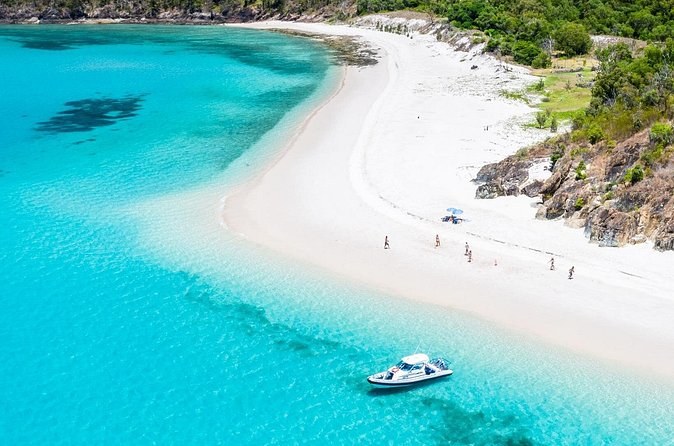
Rayglass Protector - Standard Private Charter - Whitsundays
Your own boat and skipper for up to eight, for six or eight hours on a route you choose, from one of four boarding points. Snorkel gear and water are in the price; catering is $30 a head extra, and there is no refund if you cancel.
From $2,793 per group (up to 8)
Check Availability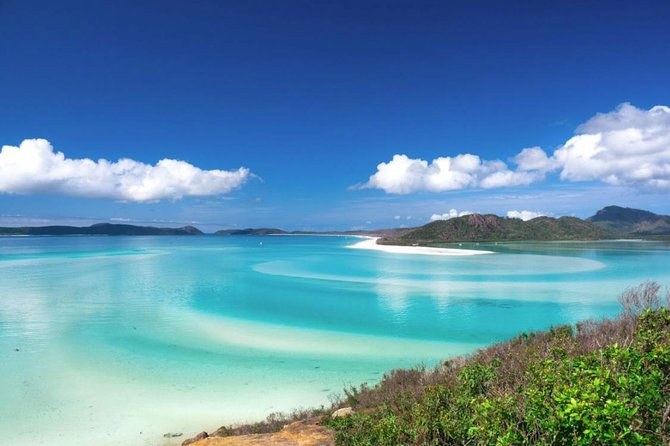
Camira Sailing Adventure through Whitsunday Islands
Ten hours under sail, with lunch, soft drinks, beer and wine in the fare, about three hours at the northern end of the beach and a reef snorkel. The lookout walk depends on the tide; cancel three days out.
From $187 per person
Check Availability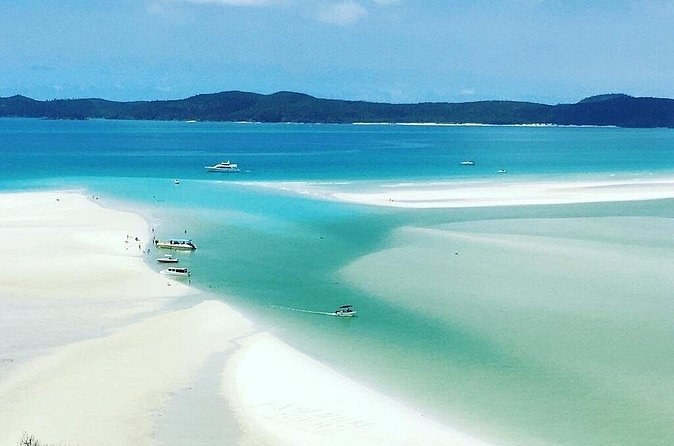
2-Night Whitsundays Sailing Cruise incl. Whitehaven Beach & Great Barrier Reef
Two nights on an 82-foot sailboat, sleeping in bunks below deck, with every meal, snorkel gear and park fees in the fare. Adults 16 to 80; cancel four days out for a refund.
From $471 per person
Check AvailabilityNext: If you do book, choose the day in choosing a Whitehaven Beach tour. Every fare sits side by side on Whitehaven Beach Tours.